
TOne OS
An AI-native operating system. Owners describe the outcome in plain language; TOne understands, plans and carries it out.
AI-NATIVE ROBOT OS
Intent to action
TOne is the AI-native operating system for robots. Tell it what you need, and it understands, plans and acts, protected by Vajra, a safety kernel no AI can override.

One AI-native OS for arms, mobile robots, quadrupeds and humanoids.
A deterministic control loop that keeps motion smooth, compliant and safe.
Thinks and acts on the robot itself. No cloud required to operate.
The Vajra kernel sits outside the AI. No model, skill or command can bypass it.
Today every robot needs specialists and months of code for each new task. TOne replaces that with intent: the owner says what should happen, and the robot works out how.
“Sort these parts by size.” TOne turns plain instructions into a plan, checks it, then acts.
Arms, mobile robots, quadrupeds and humanoids all run the same intelligence and skills.
Vajra, our own safety kernel, checks every motion. The AI can suggest, but it can never override.
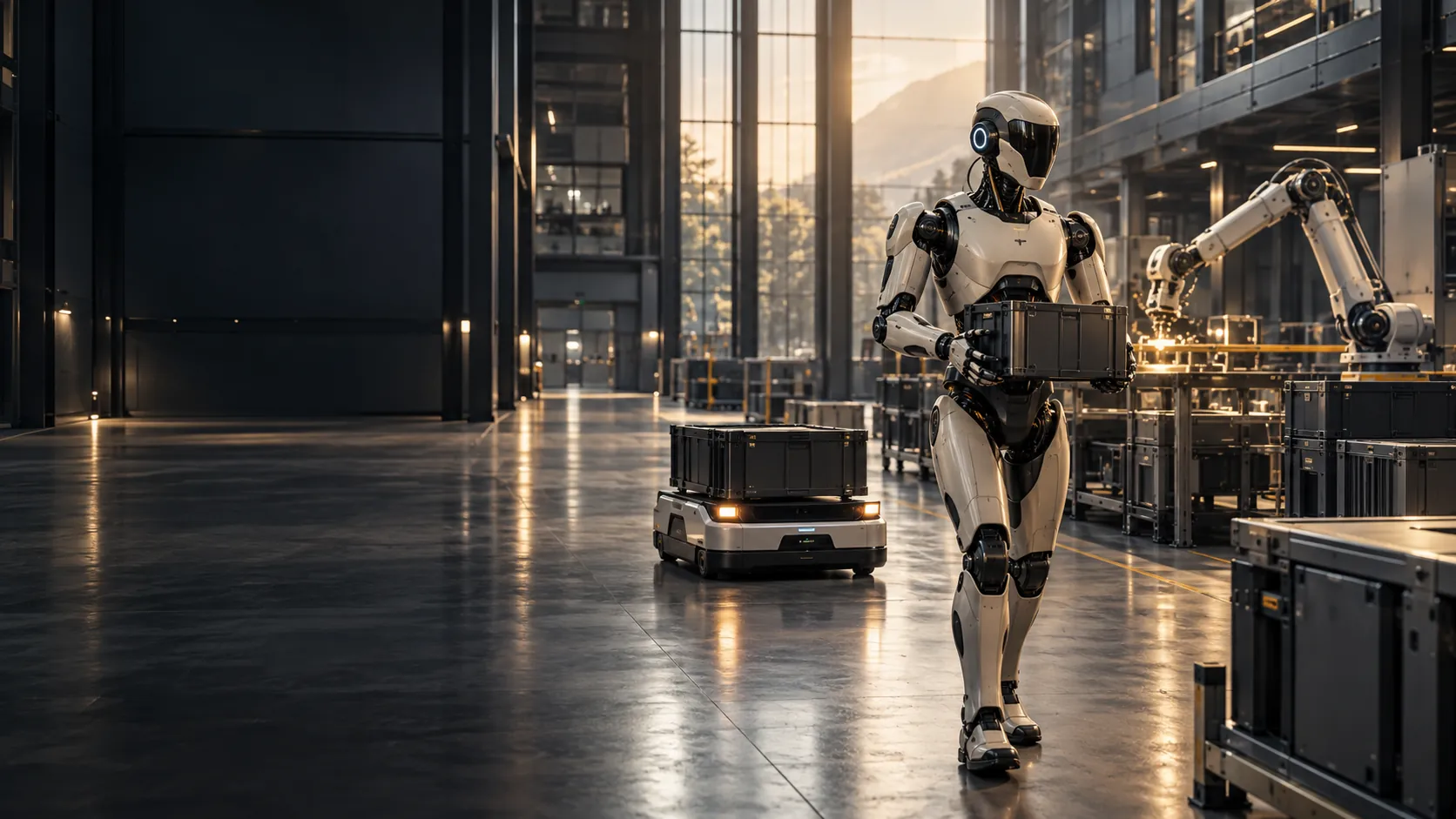 Concept visualisation
Everything a robot maker needs to ship a robot that understands its owner.
An AI-native operating system. Owners describe the outcome in plain language; TOne understands, plans and carries it out.
New abilities delivered as signed, Onebotics-reviewed skills. A robot learns a new job without being reprogrammed.
Onebotics’ own kernel between the AI and the motors. It stops a robot from going rogue, with limits no model or command can override.
Every TOne robot can gain new abilities from the Skill Store. Each skill is signed, reviewed by Onebotics and bound by the Vajra kernel.
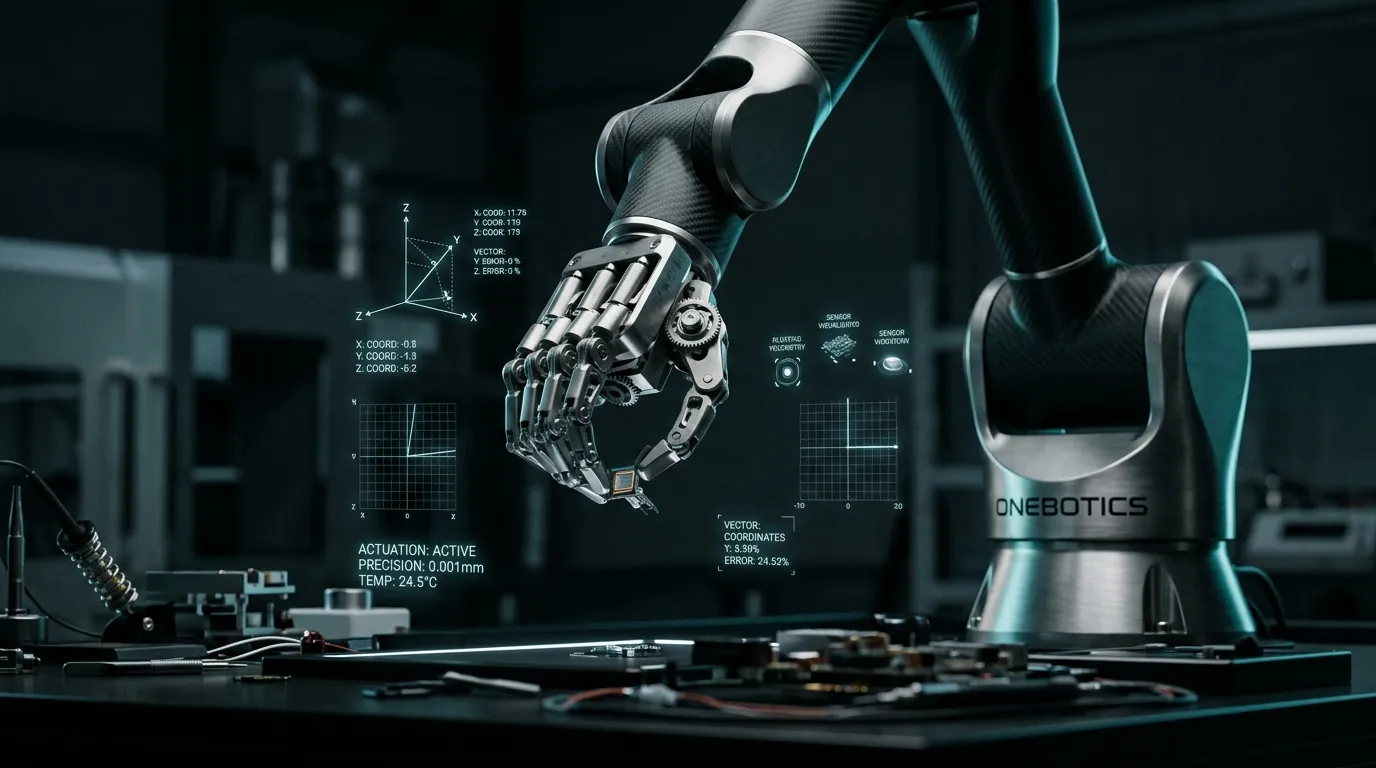
Pick mixed, tangled and reflective parts with no CAD models.
“Take this to bay four.” Maps, plans and moves on its own, fully offline.
Slows, yields and stops around people, automatically.
A proprietary stack, designed end to end for robot manufacturers and the people who run their robots.
Six layers, from plain-language intent down to motor control.
Explore the OS →
Why a TOne robot cannot be told, or tell itself, to go rogue.
Read the principles →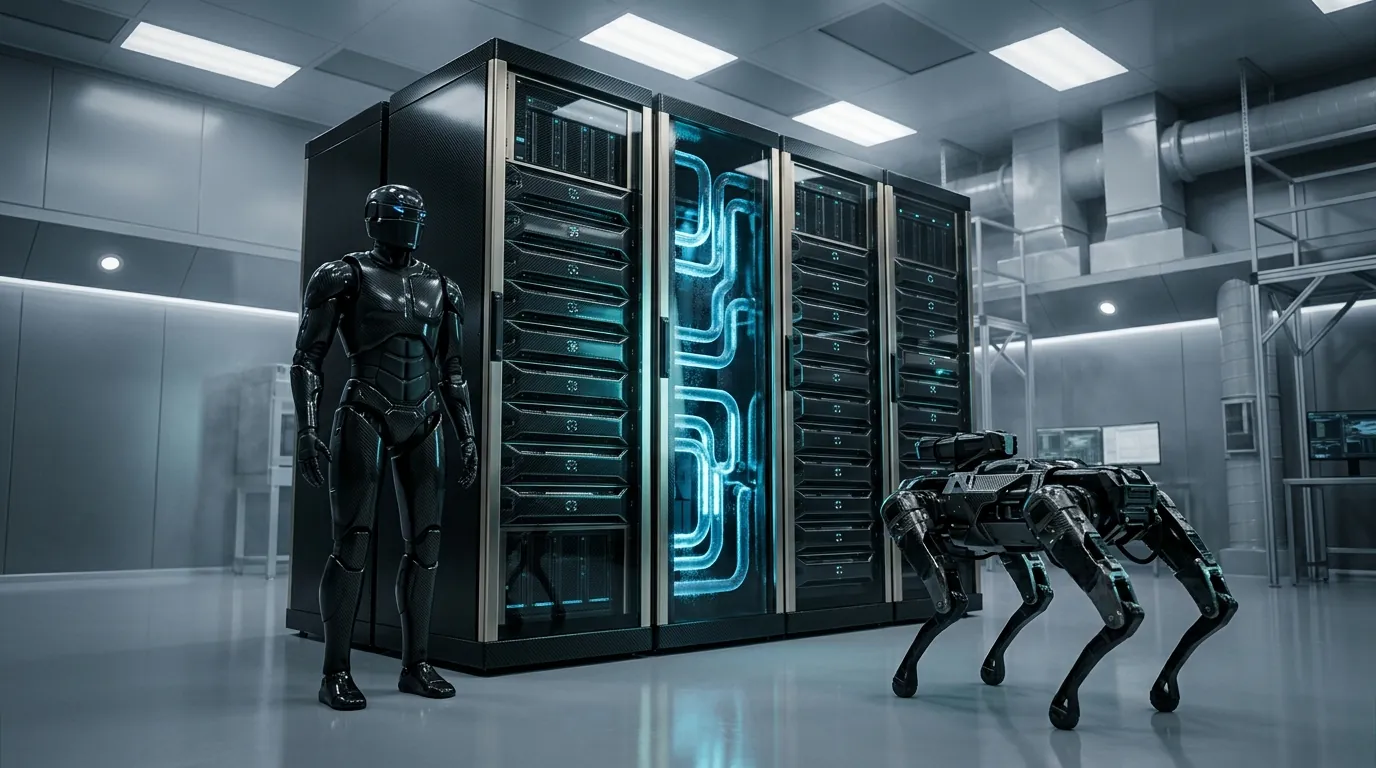
Runs on the robot. Your data and decisions stay on your premises.
Learn more →What people ask most about TOne OS and the Vajra kernel.
TOne OS is an AI-native operating system for robots, built by Onebotics. Instead of programming every task, the robot’s owner says what they need in plain language, and TOne understands it, plans the steps and carries them out on the robot itself.
Vajra is Onebotics’ own safety kernel at the core of TOne OS. It is deliberately not AI: a small, deterministic layer that checks every motion against speed, force, zone and permission limits before it reaches the motors. No model, skill or command can override it.
TOne is designed so it cannot. Every action passes through the Vajra kernel, the AI cannot change its own goals, permissions or safety rules, only verified owners can give commands, and a hardware emergency stop always works.
TOne OS is hardware-agnostic. It starts with industrial and collaborative arms and autonomous mobile robots, with quadrupeds and humanoids on the roadmap. Manufacturers integrate it through a licensed SDK and certification programme.
No. Perception, planning and control run on the robot, so it can work fully offline. Maps, video and operating data stay on the owner’s premises unless they choose to share them.
The Skill Store is where TOne robots gain new abilities, such as bin picking or facility navigation, without being reprogrammed. Every skill is signed and reviewed by Onebotics and runs inside the limits enforced by Vajra.
No. TOne OS and the Vajra kernel are proprietary, closed-source software of Onebotics, licensed to robot manufacturers.
TOne OS is built by Onebotics, a robotics software company incubated by IIM, supported by a deep-tech government grant and backed by a venture studio.
TOne OS by Onebotics, protected by Vajra. The operating system for the next generation of robots.